

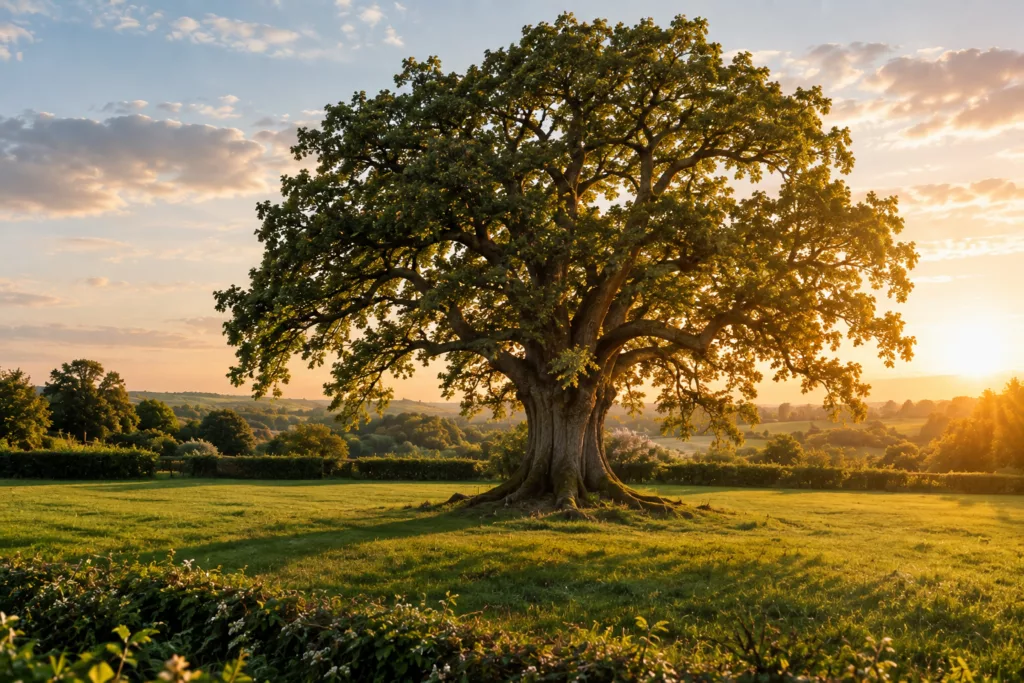
Today, a place is owned. Someone holds the title, bought it or inherited it, and can do what they like with it: maintain it or let it fall into ruin, preserve it or degrade it, resell it to the highest bidder. Ownership confers an almost absolute right, unrelated to the quality of the bond between the person and the place. Sageocracy shifts this relation through a simple idea: a place is not owned, it is entrusted.
To own, or to care for
Farmland, a workshop, a natural space are entrusted to those who care for them with the most justness and durability; a dwelling, to those who live in it. This guardianship is not a vague moral principle: it is recognised by the collective as a contribution in its own right, on the same footing as producing or healing. The shift seems discreet; yet it touches one of the foundations of our societies. Where ownership separates the right over a place from the way it is treated, guardianship reunites them: what grounds the relation to the place is no longer a title, but the real care one brings to it.
Not by decree, but by coherence
None of this happens by decree or overnight. Even before the shift, it can begin where the law allows, with the places that change hands: inheritances, sales, reclaimed wasteland. After the people’s choice, all places enter this logic: from the set day for those that were rented out or accumulated, over the course of a generation for those that people live in, without anyone being deprived of a roof. A guardian who keeps caring for a place with quality stays there. If they lastingly cease to care for a piece of land or a place of production, it is entrusted to someone else, according to a rule known in advance, applied in stages and always open to challenge, never by a decision handed down from above. Not as a sanction, but out of coherence. The home one lives in, however, is never taken away from the person who lives there, cares for it and does not seriously harm their neighbours, those who live with them or the living world: if they can no longer maintain it, the collective helps them. Land no longer changes hands like a commodity sold to the highest bidder; it changes guardian the way one passes on a relay, handing it to the one who has shown they will care for it with the most justness.
What it makes impossible
Put this way, the change may seem modest. Yet it makes land speculation far more difficult, and with it the grabbing of land by a few fortunes, the exhaustion of soils by short-term practices. And it makes possible, conversely, patient transmission, long-term regeneration, care for what outlasts a single life. This logic holds for land, but also for housing: a dwelling ceases to be an investment and becomes again a place of life, one inhabits, cares for and passes on. How this transition is concretely organised, without depriving anyone of the place where they live or creating chaos, and what it changes for each person, the forthcoming book will unfold; this article only lays down the principle.